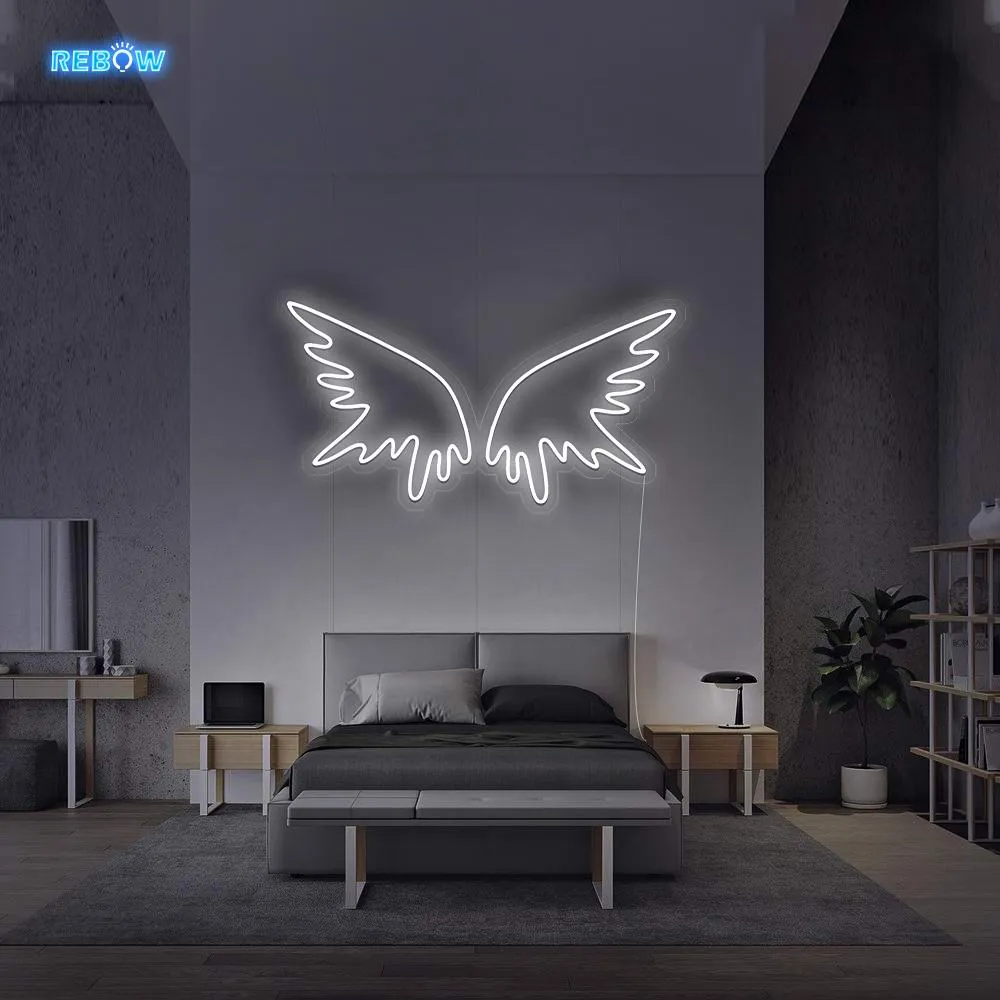
Three Ways Up
Wall mounting is the default: the acrylic backing is drilled or supplied with mounting points, fixed to the wall with the kit in the box, and the sign sits a short distance off the surface so the glow can spread. Hanging suits windows and event work — the sign suspends from wires or chains, readable from both sides where the backing is clear. Stands serve desks, counters, shelves and wedding tables, where the sign must move rather than fix.
Before drilling, hold the sign (or its paper outline) at the position and check it from the room's entrance and from the photograph angle. Neon is forgiving about many things, but not about being ten centimeters off-center on a feature wall.
Power and Dimming
The adapter converts mains to the sign's low-voltage supply; site it where air can circulate and where the cable run to the sign is tidy — most installations hide it behind furniture or a counter. The plug is matched to your country at order stage. If you want dimming — bedrooms and restaurants usually do — say so when ordering so the right dimmer arrangement is supplied; a dimmed sign at night is also a longer-lived sign.
Outdoor positions need the conversation before the order, not after: tell us the sign will live outside and the mounting and electrics will be specified for it.
Questions Buyers Ask
Can I install the sign myself?
For indoor wall-mount and hanging signs, generally yes with basic tools. Facade and electrical-connection work belongs to a local fitter or electrician.
What if my wall is glass or tile?
Tell us the surface when ordering. Adhesive and clamp solutions exist for surfaces that should not be drilled.
Keep Exploring
Send Your Design
Send the text, logo file or photo of the wall and we will come back with a layout proof and a quotation. Custom neon starts from a single piece.